

Introduction: Understanding HDPE Couplings
HDPE couplings play a crucial role in connecting sections of HDPE pipes, ensuring a secure and leak-free system. Because HDPE pipes are widely used in various industries due to their flexibility and durability, selecting and installing the right coupling is essential. In this article, we will explore the different types of HDPE couplings, their common uses, and provide important installation tips to help you achieve reliable and lasting pipe connections.
FAQs About HDPE Couplings
Before diving deeper, let’s answer some frequently asked questions about HDPE couplings:
1. What exactly are HDPE couplings?
Simply put, HDPE couplings are fittings designed to join two HDPE pipes, either in a straight line or at different angles.
2. Which types of HDPE couplings are most common?
The main types include butt fusion couplings, electrofusion couplings, compression couplings, and mechanical couplings.
3. Where are these couplings typically used?
They are commonly found in water supply, gas distribution, irrigation, and various industrial piping systems.
4. Can HDPE couplings be reused?
While mechanical and compression couplings can often be reused, butt fusion and electrofusion couplings create permanent joints that cannot be disassembled.
5. How important is proper installation?
Proper installation is vital. Without it, leaks can develop, pressure may be compromised, and the pipe system’s lifespan may shorten.

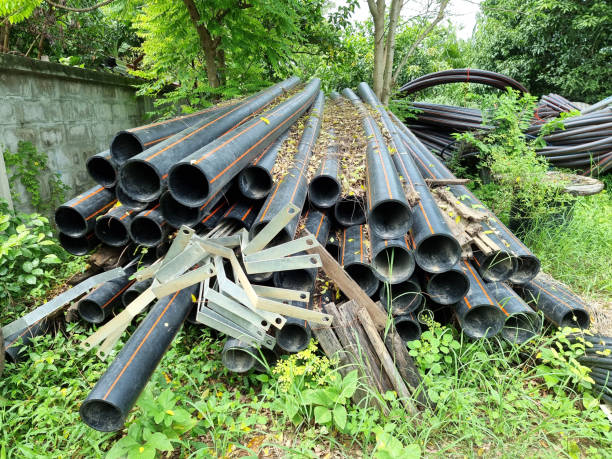
Types of HDPE Couplings
Now that we have covered the basics, let’s explore the main types of HDPE couplings:
1. Butt Fusion Couplings
Butt fusion couplings join pipes by heating the ends and pressing them together, forming a seamless and strong bond. This method creates permanent connections ideal for high-pressure applications. Moreover, butt fusion ensures uniform strength across the joint.
2. Electrofusion Couplings
Electrofusion couplings come with built-in electrical heating elements. When activated, these elements melt both the pipe surface and the coupling’s inner lining, fusing them together. This technique is particularly useful in tight or confined spaces, as well as for repairs. Additionally, electrofusion requires less manual alignment than butt fusion.
3. Compression Couplings
Compression couplings use seals and compression rings to mechanically join pipes without heat. This makes installation quicker and easier. They are especially suitable for temporary setups or systems needing frequent disassembly. However, compression couplings may not handle very high pressure compared to fusion methods.
4. Mechanical Couplings
Mechanical couplings consist of clamps or flanges secured by bolts to hold pipes together. They are versatile and allow for easy disassembly and maintenance. On the downside, mechanical couplings might not be suitable for high-pressure applications but are ideal for repairs or where flexibility is needed.
Common Uses of HDPE Couplings
Given their properties and types, HDPE couplings are used across various sectors:
- Water Supply Systems: Municipal and residential water lines rely on HDPE couplings for secure joints.
- Gas Distribution: HDPE couplings provide leak-free connections essential for natural gas pipelines.
- Agricultural Irrigation: Flexible yet strong couplings suit irrigation piping that must handle outdoor conditions.
- Sewage and Wastewater: Corrosion resistance makes HDPE couplings ideal for wastewater systems.
- Mining and Industrial: In abrasive or demanding environments, robust HDPE couplings ensure durability.
Each application requires choosing the appropriate coupling type and ensuring proper installation to maintain system integrity.
Installation Tips for HDPE Couplings
Proper installation is key to system performance and longevity. Follow these tips to ensure success:
1. Preparation
Before installation, clean pipe ends thoroughly to remove dirt, grease, or oxidation. Also, make sure to cut pipe ends squarely using the right tools to ensure proper fit.
2. Installing Butt Fusion Couplings
Begin by precisely aligning pipe ends. Next, use a heating plate to soften the pipe ends and coupling surfaces. Then, press the heated ends together under controlled pressure and allow sufficient cooling time to form a strong joint.
3. Installing Electrofusion Couplings
First, clean and scrape the pipe surfaces to expose fresh material. Then, insert pipes fully into the coupling. Afterward, connect the electrofusion control unit and follow the specified heating cycle. Finally, allow the joint to cool completely before pressurizing the system.
4. Installing Compression and Mechanical Couplings
Ensure that gaskets and seals are correctly positioned. Tighten bolts evenly in a crisscross pattern to avoid uneven pressure. After installation, always check for leaks before putting the system into operation.
HDPE Couplings vs Other Pipe Connection Methods
To help you understand the strengths and weaknesses, here is a quick comparison:
| Connection Type | Strength | Reusability | Installation Speed | Typical Use Case |
|---|---|---|---|---|
| Butt Fusion Couplings | Very High | No | Moderate | Permanent, high-pressure |
| Electrofusion Couplings | High | No | Moderate | Confined spaces, repairs |
| Compression Couplings | Moderate | Yes | Fast | Temporary or flexible joints |
| Mechanical Couplings | Moderate | Yes | Fast | Repairs, flanged connections |
Conclusion
In conclusion, HDPE couplings are vital components for creating strong, reliable pipe systems. By understanding the different types—such as butt fusion, electrofusion, compression, and mechanical couplings—you can choose the best fit for your project. Moreover, following proper installation procedures ensures leak-free connections and long-lasting performance. Whether you need permanent joints or flexible solutions, selecting the right HDPE coupling and installing it correctly makes all the difference.