
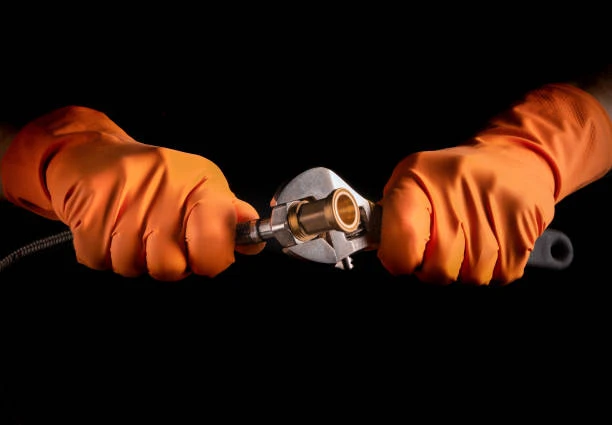
Braided hose flexible solutions have become critical components in modern automotive engineering, enabling reliable fluid and gas transfer in demanding environments. Their reinforced construction provides durability and flexibility, making them indispensable for everything from fuel delivery to turbocharger cooling. This article explores the specialized role of braided hoses in automotive systems, offering insights into their design, applications, and compliance with industry standards.
Common Automotive-Related Questions (FAQ)
1. What materials are used in automotive braided hoses?
Automotive hoses typically feature:
- Inner Tube: EPDM rubber (coolant systems), PTFE (fuel lines), or Nylon 11 (hydraulic oil)
- Reinforcement Layer: Stainless steel 304/316L (high-pressure applications), polyester fibers (low-pressure systems)
- Outer Jacket: Silicone (heat resistance), PVC (abrasion protection), or polyurethane (chemical resistance)
2. What pressure ratings do automotive hoses handle?
Pressure capabilities vary by application:
- Fuel injection systems: 200+ bar (3,000+ psi)
- Turbocharger cooling lines: 150-200 bar
- Brake fluid transfer: 10-20 bar
- Air conditioning refrigerant: 15 bar
3. What temperature ranges are suitable for automotive hoses?
Standard rubber hoses operate between -40°C to 150°C. Specialized variants include:
- Silicone hoses: -60°C to 260°C (exhaust systems)
- PTFE-lined hoses: -200°C to 260°C (fuel lines)
- EPDM hoses: -50°C to 180°C (coolant systems)
4. How to prevent hose failure in automotive systems?
- Use compatible fittings (crimped or swaged)
- Maintain minimum bend radius (3x hose diameter)
- Inspect regularly for abrasion or corrosion
- Replace hoses showing outer layer wear or reduced flexibility
5. What certifications apply to automotive hoses?
Key standards include:
- SAE J2044 (fuel system hoses)
- ISO 10993 (biocompatibility for medical vehicles)
- FMVSS 106 (brake hose requirements)
- ASTM D6789 (coolant hose specifications)
Technical Architecture for Automotive Applications
Modern automotive braided hoses integrate three engineered layers:
- Inner Core: Directly contacts automotive fluids. Options include:
- EPDM rubber (ethylene glycol coolant)
- PTFE (gasoline, diesel, biofuels)
- Thermoplastic elastomers (TPE) for disposable applications
- Reinforcement Layer: The performance determinant. Configurations vary:
- Single Braided: 304 stainless steel wire (8-12% elongation)
- Double Braided: Polyester yarn over steel core (20% more flexible)
- Convoluted: Helical corrugations with braided overlay (360° flexibility)
- Outer Jacket: Protects against environmental factors. Choices include:
- Silicone (heat resistance up to 260°C)
- Polyurethane (chemical/oil resistance)
- PVC (UV stability for exterior applications)
The braiding process uses CNC machines to interlace wires/fibers at precise angles. This construction enables stainless steel variants to achieve 1.5mm bend radius per meter while maintaining 85% of rigid pipe pressure ratings.
Critical Automotive Applications
Braided hose flexible solutions enable core functionalities across key automotive systems:
Fuel Delivery Systems
- Direct injection engines use PTFE-lined hoses for 200+ bar fuel pressure
- Ethanol-compatible variants resist alcohol-based fuel degradation
- Stainless steel braiding prevents vapor lock in high-performance vehicles
Turbocharger Cooling
- Silicone hoses withstand 150-200°C oil temperatures
- Convoluted designs manage engine vibration while maintaining flow
- Dual-layer hoses prevent heat soak in compact engine bays
Brake Systems
- DOT-approved stainless steel hoses maintain pressure integrity under 10-20 bar
- Kevlar®-reinforced variants resist abrasion in off-road applications
- Low-expansion designs ensure precise pedal feel
Cooling Systems
- EPDM rubber hoses transfer ethylene glycol at -40°C to 150°C
- Convoluted stainless steel hoses manage flow in tight radiator configurations
- UV-resistant outer layers prevent degradation in convertible tops
Air Conditioning
- Refrigerant hoses handle R134a/R1234yf gases at 15 bar pressure
- Barrier layers prevent refrigerant leakage (0.5ml/year maximum)
- Vibration-absorbing designs reduce compressor noise
Exhaust Systems
- Nickel-alloy braided hoses withstand 900°C exhaust gases
- Heat-resistant sleeves protect adjacent components
- Flexible sections accommodate engine movement
Compliance and Performance in Automotive Design
Selecting automotive hoses involves rigorous validation:
- Fluid Compatibility: Verify resistance to fuels (E10, E85), oils (DOT 3/4), and coolants (G12, G13)
- Thermal Cycling: Simulate -40°C to 150°C fluctuations over 500 cycles
- Pressure Testing: Confirm burst pressure exceeds maximum operating pressure by 3x
- Vibration Resistance: Withstand 5G vibration loads for 200 hours
- Aging Resistance: Accelerated aging tests at 120°C to simulate 5-year service life
For example, hoses used in electric vehicle battery cooling systems must withstand glycol-based fluids while maintaining flexibility in sub-zero temperatures.
Future Innovations in Automotive Hose Technology
Emerging developments promise to expand capabilities:
- Graphene-enhanced silicone: Improves thermal conductivity by 300%
- Bio-based polymers: 40% reduced carbon footprint in disposable hoses
- Smart hoses: Embedded sensors monitor temperature and pressure in real-time
- 4D-printed braiding: Self-adjusting configurations for adaptive engine designs
Researchers are also exploring nanofiber braiding to create hoses with 80% greater porosity control for advanced fuel cell applications.
Conclusion
Braided hose flexible solutions represent a convergence of engineering precision and automotive innovation. Their ability to maintain reliable fluid flow under demanding conditions makes them vital to everything from fuel-efficient engines to electric vehicle battery systems. As automotive technology evolves toward hybrid powertrains and autonomous driving, the role of specialized braided hoses will only grow more critical, driven by advancements in materials science and smart manufacturing. By adhering to strict industry standards while embracing new technologies, these hoses will continue enabling automotive breakthroughs for years to come.