
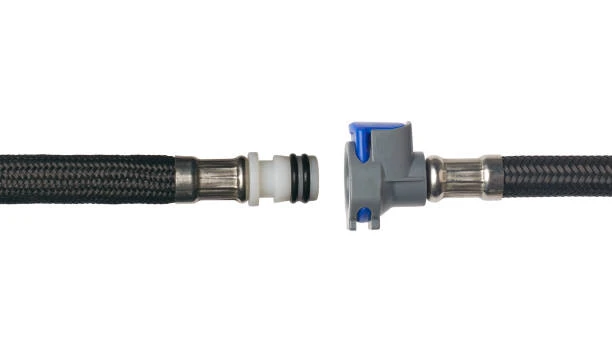
In countless industries and homes, a remarkable component works tirelessly behind the scenes: the metal pipe braid hose. This flexible powerhouse combines brute strength with surprising agility, making it a critical solution for managing fluids and gases under pressure. This article explores the essential characteristics, widespread applications, and public trust that this hose commands.
Basic Characteristics: A Blend of Strength and Flexibility
A metal pipe braid hose doesn't rely on a single material but on a clever synergy between different components. Its design is elegantly simple yet incredibly effective.
- The Inner Core: A flexible PTFE (Teflon) or rubber tube forms the core. This inner hose handles the fluid transfer, chosen for its resistance to corrosion, high temperatures, and chemical degradation.
- The Braided Armor: Woven tightly around this inner core is a mesh of stainless steel wires. This braiding is the hero of the story, providing immense tensile strength and containing internal pressure. The braided layer acts like a cage, preventing the inner tube from expanding and bursting under stress.
- The End Fittings: Crimped or attached to each end are durable fittings, typically made from stainless steel, brass, or other robust metals. These provide a secure, leak-proof connection to other system parts.
Together, these elements create a hose that excels in environments where rigid pipes would fail. It absorbs vibration, withstands extreme pressure pulses, and can be routed around obstacles without sacrificing integrity.
Industry Applications: Where Strength Meets Versatility
The unique properties of metal braided hoses make them indispensable across a vast spectrum of sectors.
- Automotive & Aerospace: In vehicles, these hoses handle critical roles in power steering, brake lines, turbocharger systems, and fuel injection, where they must endure constant vibration, heat, and high pressure. Aerospace applications demand even higher standards for reliability and safety.
- Industrial Manufacturing: Factories use them for hydraulic and pneumatic systems that power machinery. They transport steam, chemicals, oils, and compressed air, keeping production lines running smoothly.
- Plumbing & Appliances: Many modern homes feature these hoses under sinks as supply lines for dishwashers and washing machines. Their strength provides a reliable barrier against leaks that could cause significant water damage.
- Chemical Processing: The combination of a chemically inert inner liner (like PTFE) and a protective stainless steel sheath allows for the safe transfer of aggressive solvents, acids, and other volatile compounds.
Public Recognition: The Mark of a Reliable Product
For the general public, trust in metal braided hoses comes from direct experience and a reputation for safety. People most commonly encounter them as water supply lines in their homes. The shift from easily burst rubber hoses to braided stainless steel represents a major advancement in household safety.
Consumers and professionals alike recognize the visual signature of the steel braid as a mark of quality and durability. This recognition builds confidence; when people see that metallic weave, they associate it with a product that will protect their property from costly and dangerous leaks. Its adoption into building codes and recommendations by plumbers worldwide further cements its status as a trusted solution.
Frequently Asked Questions (FAQ)
Q1: Are metal braided hoses completely burst-proof?
While they offer exceptionally high burst strength, no hose is absolutely burst-proof. However, their design makes them vastly more resistant to failure than non-braided alternatives, especially under pressure spikes and abrasion.
Q2: Can I use them for any fluid?
You must choose the hose based on the fluid compatibility of its inner tube. While stainless steel braid suits most environments, the inner liner (e.g., EPDM rubber for water, PTFE for chemicals) must be compatible with the specific fluid to prevent degradation.
Q3: How long do these hoses typically last?
Service life depends on the operating environment (temperature, pressure, chemical exposure). With proper installation and under normal conditions, they can last for many years. Always inspect them periodically for signs of wear, like kinking or fraying of the braid.
Q4: Why would I choose this over a solid pipe?
The answer is flexibility and vibration resistance. These hoses absorb movement and vibration that would fatigue and crack a solid pipe connection. They also simplify installation in tight spaces.
Q5: Can the stainless steel braid rust?
High-quality hoses use 304 or 316 stainless steel, which offers excellent resistance to rust and corrosion. However, in highly corrosive environments (e.g., coastal salt air or certain chemical plants), 316 stainless provides the best longevity.
Summary
The metal pipe braid hose stands as a premier example of smart engineering solving complex problems. It masterfully balances the contradictory needs of flexibility and high-pressure strength through its core-and-armor design. Its reliability fuels critical operations in aviation, manufacturing, and automotive systems, while also providing everyday safety and peace of mind in our homes. As technology advances, this humble yet vital component will continue to be the unsung hero, ensuring that everything from our cars to our kitchens operates smoothly and safely.