

Introduction: Know Your PPR Fittings
If you're working with PPR (Polypropylene Random Copolymer) pipes, understanding the different types of fittings is crucial for building an efficient and leak-proof system. Whether you're installing hot and cold water systems, industrial pipelines, or HVAC systems, knowing the names and functions of common PPR fittings helps you choose the right components and ensure proper connections.
This guide explains the most frequently used PPR fittings, their names, and how each one functions in plumbing systems.
FAQ: Questions About PPR Fittings
1. What are PPR fittings used for?
They connect PPR pipes, change direction, control flow, and join pipes of different diameters or materials.
2. Are PPR fittings used for both hot and cold water?
Yes. They are suitable for temperatures up to 95°C, ideal for residential, commercial, and industrial applications.
3. Can PPR fittings be reused?
No. Once fused by heat, they create a permanent bond and cannot be reused.
4. Do PPR fittings come in different sizes?
Yes. Common sizes range from 20mm to 160mm, depending on the project type.
5. How are PPR fittings installed?
They are installed using heat fusion—a method that joins pipe and fitting into a single, leak-proof unit.
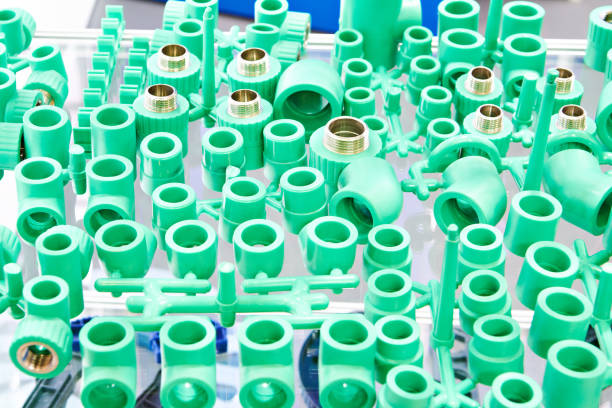
Most Common PPR Fittings and Their Functions
Below is a detailed list of the most common PPR fittings you’ll encounter and what each is designed to do:
1. PPR Elbow (90° and 45°)
Function: Changes the direction of the pipe.
- 90° Elbow: Creates a sharp turn
- 45° Elbow: Provides a softer bend
- Use Case: Corners in wall piping or under sinks
2. PPR Tee
Function: Connects three pipes—one main line with two branches.
- Equal Tee: All three outlets are the same size
- Reducing Tee: Branch size is smaller than the main pipe
- Use Case: Branching water flow into different rooms
3. PPR Coupling (Socket)
Function: Connects two pipes of the same diameter in a straight line.
- Use Case: Extending the pipe or repairing a cut section
4. PPR Reducer / Reducing Coupling
Function: Connects pipes of different diameters.
- Use Case: Transitioning from a larger pipe to a smaller one
5. PPR End Cap / Plug
Function: Closes off the end of a pipe.
- Use Case: Sealing an unused line or for testing pressure
6. PPR Union
Function: Connects two pipes but allows disassembly.
- Use Case: Areas that may need future maintenance or access
7. PPR Flange
Function: Joins PPR to valves, tanks, or flanged equipment using bolts.
- Use Case: Industrial or high-pressure systems
8. PPR Male Adapter (Male Thread)
Function: Connects a PPR pipe to a metal or threaded fitting.
- Use Case: Connecting to metal valves, faucets, or water meters
9. PPR Female Adapter (Female Thread)
Function: Connects to male-threaded metal parts.
- Use Case: Faucets, boilers, metal plumbing components
10. PPR Ball Valve
Function: Controls flow with a rotating ball inside the valve.
- Use Case: Shuts off or regulates water flow manually
11. PPR Clamp Saddle / Tap Tee
Function: Adds a new branch to an existing line without cutting the pipe.
- Use Case: Adding irrigation or secondary outlets
Comparison Table: PPR Fittings at a Glance
| Fitting Name | Shape Example | Key Function | Typical Use |
|---|---|---|---|
| Elbow 90°/45° | ⤴ / ↗ | Change pipe direction | Wall corners, under sinks |
| Tee | ├ or ┬ | Divide flow into two directions | Split water to different zones |
| Coupling | — | Join two straight pipes | Extend pipeline |
| Reducer | →• | Connect large to small pipe | Transition in size |
| End Cap | ● | Close a pipe end | Seal or pressure testing |
| Union | o==o | Detachable joint | Maintenance access |
| Flange | ◎ | Connect to flanged parts | Industrial systems |
| Male Adapter | ♂ | Connect to female thread | Metal-to-plastic connection |
| Female Adapter | ♀ | Connect to male thread | Faucets, valves |
| Ball Valve | ⏺ | Manual on/off control | Main line shutoff |
| Clamp Saddle | ↧ | Add outlet without cutting main pipe | Irrigation, branch tap |
Tips for Selecting the Right PPR Fitting
When choosing a PPR fitting:
- Check the Size: Match the pipe and fitting diameters.
- Know the Application: Use valves or unions where flow control or disassembly is needed.
- Consider Pressure Rating: Match PN16 or PN20 with your system's pressure demands.
- Use Certified Products: Look for ISO or DIN markings to ensure quality.
- Get Compatible Tools: Heat fusion tools must match fitting size and type.
Summary: Know the Names, Install with Confidence
Whether you're a professional plumber or a DIY enthusiast, understanding the names and functions of PPR fittings helps you plan better, avoid mistakes, and build a reliable plumbing system. From elbows and tees to valves and adapters, each fitting has a specific role—and using the right one makes all the difference.
So next time you're handling a piping project, refer back to this guide and choose fittings that fit your system's needs with clarity and confidence.