
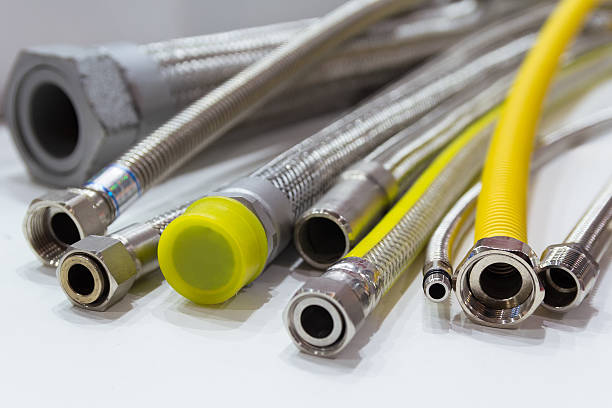
Metal pipe braid hose installation requires careful planning and precise execution to ensure optimal performance and longevity. Proper installation techniques directly impact system reliability, safety, and maintenance requirements. This comprehensive guide examines best practices for installing metal pipe braid hoses, covering routing considerations, connection methods, support requirements, and testing procedures. We will explore various installation scenarios for different applications, address common challenges, and provide practical solutions for both new installations and system upgrades. Understanding these installation principles helps engineers, technicians, and maintenance professionals achieve reliable performance while minimizing potential issues that could affect system operation or safety.
Basic Definition and Key Characteristics
Metal pipe braid hoses consist of a flexible corrugated inner core protected by one or more layers of braided metal wire, typically stainless steel. These hoses offer excellent flexibility, high pressure capability, and resistance to temperature extremes and corrosion. Their installation requires special consideration of minimum bending radii, which vary based on hose diameter and construction. The braided reinforcement provides strength but requires protection against abrasion and crushing during installation. End connections must accommodate movement and vibration while maintaining leak-free performance. Proper installation preserves the hose's flexibility while ensuring it can handle system pressures, temperatures, and movement without premature failure.
Frequently Asked Questions (FAQ)
1. What are the essential considerations for routing metal braid hoses?
Plan hose routes to avoid sharp bends and minimize stress on connections. Maintain minimum bending radii specified by the manufacturer, typically 6-10 times the hose diameter. Avoid twisting during installation by keeping hose ends in the same plane. Provide adequate clearance from hot surfaces, moving components, and sharp edges.
2. How do we properly install and torque end connections?
Follow manufacturer specifications for assembly procedures and torque values. Clean all mating surfaces before connection and use appropriate sealants when recommended. Avoid using pipe wrenches directly on hose fittings to prevent damage. Use backup wrenches to prevent twisting during tightening.
3. What support and clamping methods work best for these hoses?
Install supports at recommended intervals, typically every 1-2 meters depending on hose size and weight. Use cushioned clamps that don't compress the hose excessively. Avoid mounting clamps directly on flexing sections of the hose. Provide additional support near connections and direction changes. Use guide rings or brackets to control movement in high-vibration applications.
4. How should we handle installation in high-temperature applications?
Allow for thermal expansion by providing extra length in the routing. Use high-temperature rated seals and gaskets at connections. Install heat shields or insulation where hoses run near heat sources. Avoid direct contact with hot surfaces that could cause localized overheating.
5. What testing should we perform after installation?
Conduct visual inspection to verify proper routing and support installation. Perform pressure testing at 1.5 times working pressure for at least 30 minutes. Check for leaks at all connections and along the hose length. Verify adequate clearance from adjacent components and structures.
Common Uses and Application Industries
Metal pipe braid hose installation techniques vary significantly across different industries and applications. Automotive and transportation applications require precise routing in tight spaces with protection against vibration and abrasion. Industrial manufacturing installations demand robust support systems for hydraulic and pneumatic applications. Chemical processing plants need careful material compatibility considerations and leak-free connections. Power generation applications require high-temperature capable installations with adequate expansion accommodation. Aerospace installations demand extremely precise routing and weight-optimized support systems. Each industry has specific installation standards and best practices that address their unique operational requirements and safety considerations while ensuring reliable performance.
Conclusion
In summary, proper metal pipe braid hose installation requires attention to detail and adherence to manufacturer guidelines throughout the process. Careful routing, correct connection techniques, and adequate support systems ensure optimal performance and longevity. Different applications demand specific installation approaches that address their unique operational requirements while maintaining fundamental principles of proper hose handling and installation. By following best practices and industry standards, installers can create reliable fluid systems that operate safely and efficiently. The continued development of installation tools and techniques will further improve system reliability and make installation processes more efficient. Proper installation remains the foundation for achieving all the performance benefits that metal pipe braid hoses offer across various industrial applications.