
1. Introduction
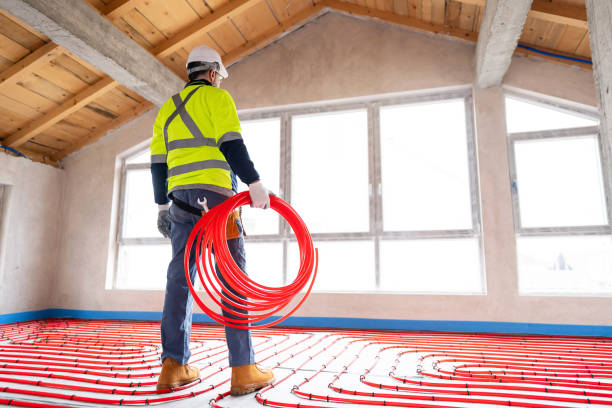
Laying underfloor heating pipes isn't just about rolling out tubing—it's about precision, planning, and understanding how heat flows beneath your feet. Whether you're installing a system in a single room or across an entire floor, the success of your underfloor heating depends heavily on how the pipes are laid. This guide walks you through everything you need to know: the tools required, step-by-step installation, layout patterns, common mistakes, and expert tips to ensure your system performs efficiently and reliably.
2. FAQs: Common Questions About Pipe Installation
Q1: What’s the best pipe spacing for underfloor heating?
Spacing usually ranges from 100mm to 200mm, depending on room size and insulation quality.
Q2: Can I Laying underfloor heating pipes myself?
Yes, with good planning and basic DIY skills. However, professional support is recommended for complex layouts.
Q3: Should I use spiral or serpentine layout?
Both are effective, but spiral offers more even heat for larger areas. Serpentine is easier to install in small rooms.
Q4: How do I fix the pipes to the floor?
Use clips, staples, or fixing rails designed specifically for underfloor heating.
Q5: When can I switch on the system after installation?
Wait at least 7–28 days after screeding, depending on screed type and drying conditions.

3. What Are Underfloor Heating Pipes?
Underfloor heating pipes are flexible, heat-resistant tubes—commonly made from PEX, PE-RT, or multilayer materials—designed to circulate warm water beneath the floor surface. These pipes distribute radiant heat evenly throughout the room, providing comfort and energy efficiency. The material is chosen for its flexibility, resistance to scaling and corrosion, and long-term durability under fluctuating temperatures and pressures.
4. Tools and Materials You’ll Need
Before you begin laying underfloor heating pipes, gather the necessary materials and tools:
- Underfloor heating pipe (commonly 16mm PEX or PE-RT)
- Pipe clips, staples, or fixing rails
- Pipe decoiler (for long coils)
- Insulation boards
- Manifold and fittings
- Pipe layout drawings or plans
- Pressure testing kit
- Measuring tape and marker
- Screed or flooring system
Proper preparation will make installation smoother and reduce mistakes.
5. Step-by-Step Guide to Laying the Pipes
✅ Step 1: Prepare the Subfloor
Clear the surface and lay down insulation boards to reduce heat loss. The floor must be clean, dry, and level.
✅ Step 2: Install Edge Insulation
Place edge insulation around room perimeters. It allows for floor expansion and helps retain heat inside the heated area.
✅ Step 3: Fix the Pipe Retention System
Use clip rails or staples to create anchor points on the insulation. These will hold the pipes firmly in place.
✅ Step 4: Connect the Pipe to the Manifold
Uncoil the pipe using a decoiler and attach the starting end to the manifold. Label the loop for clarity.
✅ Step 5: Lay the Pipe in the Desired Pattern
Follow your plan using a spiral or serpentine layout. Maintain consistent spacing—150mm is typical for standard applications.
✅ Step 6: Secure the Pipe at Intervals
Fix the pipe to the insulation using clips every 300–500mm. Tight bends should be supported more closely.
✅ Step 7: Return the Loop to the Manifold
After completing the loop, connect the other end to the correct manifold port. Check all connections for tightness.
✅ Step 8: Pressure Test the System
Test with water or air to detect leaks before screeding. Hold pressure for at least 30–60 minutes and monitor for drops.
✅ Step 9: Apply Screed or Floor System
Once testing is complete, pour the screed or install a dry floor system over the pipes, ensuring they remain secure and undisturbed.
6. Choosing the Right Pipe Layout Pattern
The way you lay your pipes affects heat distribution, flow resistance, and installation difficulty. Here's a comparison:
| Layout Pattern | Best For | Pros | Cons |
|---|---|---|---|
| Serpentine | Small rooms, simple zones | Easy to install, fewer curves | May cause uneven heat zones |
| Spiral | Large or open spaces | Uniform heat distribution | Requires more planning |
| Double Serpentine | High-heat-demand zones | Focused heat in specific areas | More pipe length needed |
Select a pattern based on room shape, insulation, and heating needs.
7. Mistakes to Avoid During Pipe Laying
Even experienced installers can make mistakes. Here are key errors to watch out for:
- Incorrect spacing can lead to hot or cold spots
- No insulation causes significant energy loss
- Skipping pressure tests risks undetected leaks under screed
- Tight bends or kinks can restrict flow and damage pipes
- Unmarked loops make future maintenance difficult
Taking your time and following each step can save both money and headaches later.
8. Expert Tips for a Professional Finish
- Use a pipe decoiler to prevent tangling and twisting
- Avoid pipe lengths over 100m per loop to maintain pressure balance
- Install from cold zones outward for optimal heat distribution
- Label each loop clearly for easy identification and maintenance
- Combine with smart thermostats for better heat control and energy savings
These small touches can make a big difference in comfort and performance.
9. Conclusion
Learning how to lay underfloor heating pipes like a pro is all about preparation, consistency, and smart design. By following the correct steps—selecting the right materials, applying the best layout, and pressure-testing your system—you can achieve a high-performance heating solution that lasts for decades. Whether for home comfort or commercial efficiency, proper pipe installation ensures your system operates safely, evenly, and cost-effectively.