
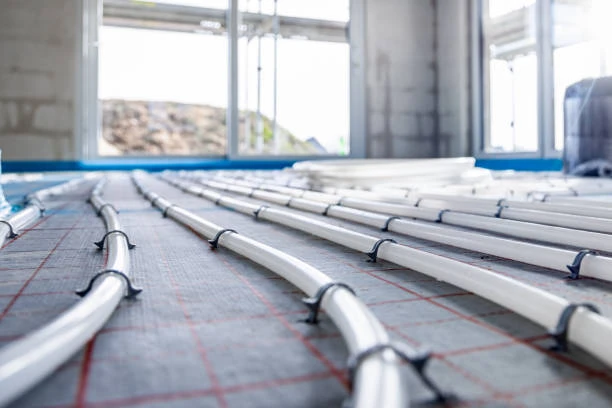
Underfloor heating systems offer a modern, energy-efficient way to heat spaces, but their performance depends heavily on the right pipe size. The most commonly used diameters—10mm, 12mm, and 16mm—each have specific advantages and applications. Choosing the wrong size can lead to uneven heating, system inefficiency, or even long-term performance issues. In this guide, we’ll break down the differences between 10mm, 12mm, and 16mm underfloor heating pipes to help you select the most suitable option for your project.
FAQ: Pipe Sizes in Underfloor Heating
1. Why are there different pipe sizes for underfloor heating?
Different pipe sizes allow installers to match the system to room size, floor build-up height, and heat output requirements.
2. Is bigger always better in underfloor heating pipes?
Not necessarily. Larger pipes like 16mm carry more water but are less flexible, while smaller pipes like 10mm are better for tight or low-profile areas.
3. Which pipe size is best for home installations?
16mm is the most common size for residential projects due to its versatility and efficiency.
4. Can I mix pipe sizes in one system?
Mixing is possible but must be carefully designed to avoid flow rate and pressure imbalances.
5. Do all sizes work with every manifold?
No. Manifolds must be compatible with the specific pipe diameter, so always check manufacturer specifications.
Understanding Pipe Diameter and Its Importance
The diameter of an underfloor heating pipe directly impacts water flow rate, response time, and installation flexibility. Each size serves a unique purpose and should be matched to the project's design requirements.
Factors Affected by Pipe Size:
- Heat output
- Water volume
- System pressure
- Response time
- Installation height
- Loop length per circuit
Choosing the correct diameter ensures efficient heat distribution, especially in large or irregularly shaped rooms.

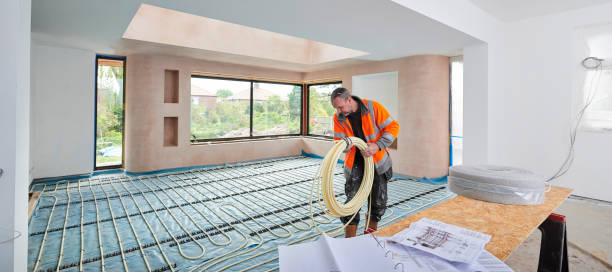
10mm Underfloor Heating Pipes
Key Features:
- Very slim and flexible
- Best for renovations and thin floor profiles
- Compatible with overlay systems
Advantages:
- Low floor build-up: Ideal for projects with limited space
- Fast heat-up time due to lower water volume
- Easier to route through tight areas or corners
Limitations:
- Shorter loop lengths (usually around 60–70m max)
- Not suitable for large rooms due to limited heat output
- May require more circuits and manifold ports
Best Used In:
- Apartment retrofits
- En-suites and small bathrooms
- Lightweight flooring or wood frame structures
12mm Underfloor Heating Pipes
Key Features:
- Slightly larger than 10mm but still compact
- Offers balance between flexibility and heat output
- Suitable for both new builds and retrofits
Advantages:
- More heat per loop than 10mm
- Still allows for low-profile floor systems
- Compatible with a range of fixing systems (staples, rails, mats)
Limitations:
- Loop length limited to around 80–90m
- May not be sufficient for very large open areas
Best Used In:
- Kitchens and medium-sized rooms
- Refurbishment projects where height matters
- Lightweight screed or dry-fit systems
16mm Underfloor Heating Pipes
Key Features:
- Most commonly used pipe size for underfloor heating
- Offers maximum flow and heat delivery per loop
- Suitable for large spaces and high-output systems
Advantages:
- Longest loop lengths (up to 100–120m)
- Fewer circuits needed for larger rooms
- Works well with thicker screeds and concrete slabs
Limitations:
- Less flexible than 10mm or 12mm
- Requires more build-up height (minimum 50–65mm with screed)
- Not ideal for very tight bends or thin floors
Best Used In:
- Full-house heating systems
- Living rooms, open-plan spaces, and ground floors
- New builds with ample insulation and screed layers
Pipe Size Comparison Table
| Feature | 10mm Pipe | 12mm Pipe | 16mm Pipe |
|---|---|---|---|
| Flexibility | Very high | High | Moderate |
| Floor build-up needed | Very low (20–30mm) | Low (30–40mm) | Medium to high (50–65mm) |
| Heat output per loop | Low | Medium | High |
| Max loop length | ~60–70 meters | ~80–90 meters | ~100–120 meters |
| Best for | Small rooms, retrofits | Medium rooms, low-profile | Large rooms, high-efficiency |
| Installation speed | Fast | Moderate | Slower |
| Pipe spacing options | Closer (75–100mm) | Moderate (100–150mm) | Wider (150–200mm) |
This table offers a quick overview of how pipe size affects system performance and installation considerations.
How to Choose the Right Pipe Size for Your Project
When selecting a pipe size, consider the following:
- Room size
- Small rooms → 10mm or 12mm
- Medium rooms → 12mm
- Large or open-plan areas → 16mm
- Floor build-up constraints
If floor height is limited, 10mm or 12mm pipes paired with dry systems or low-profile panels are ideal. - Desired heat output
Higher output systems benefit from 16mm pipes that allow for wider spacing and fewer loops. - Project type
- New builds have more design flexibility and often use 16mm pipes.
- Retrofits benefit from smaller pipes and minimal disruption.
- Insulation quality
Better insulation means you can use smaller pipes without compromising on warmth.
Common Mistakes to Avoid
- Choosing pipe size based only on cost – 10mm may be cheaper, but unsuitable for larger rooms.
- Skipping professional system design – Loop length and flow rate need careful calculation.
- Ignoring manifold compatibility – Not all manifolds accept all pipe sizes.
- Using large pipes in tight spaces – 16mm may be hard to fit in narrow or intricate layouts.
Summary: Which Pipe Size Is Right for You?
Choosing between 10mm, 12mm, and 16mm underfloor heating pipes depends on your specific project needs. Each size has strengths and trade-offs, so selecting the right one ensures efficient heating, cost control, and long-term reliability.
- Use 10mm for tight spaces and overlay systems
- Choose 12mm for mid-sized rooms and retrofit flexibility
- Go with 16mm for high output, long loops, and new constructions
Always consult with your heating designer or supplier to ensure pipe size aligns with your system requirements. With the right pipe in place, your underfloor heating will deliver cozy, consistent warmth for decades.