
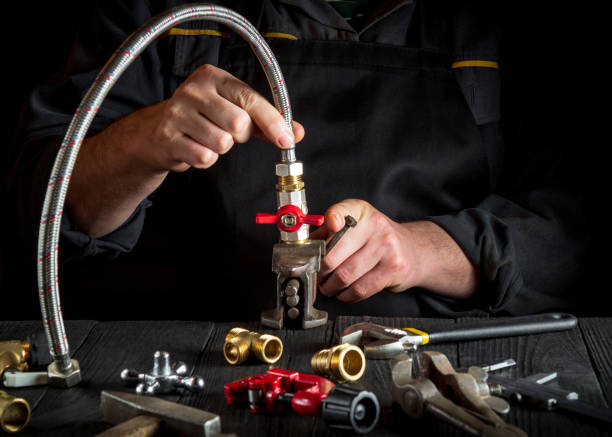
Braided hose flexible solutions have become indispensable across industries requiring reliable fluid and gas transfer in dynamic environments. Combining reinforced construction with exceptional flexibility, these hoses adapt to complex installation spaces while maintaining structural integrity under pressure. This article explores the technical attributes, practical applications, and selection criteria for these versatile engineering components.
Common Flexibility-Related Questions (FAQ)
1. What materials provide optimal flexibility in braided hoses?
- PVC/rubber blends: Ideal for general-purpose applications (-5°C to 65°C)
- Silicone: Superior flexibility at cryogenic temperatures (-60°C)
- Stainless steel 316L: Maintains rigidity while allowing 25% better bending than solid tubes
- Thermoplastic elastomers (TPE): Enable 180° bending without kinking
2. How does flexibility impact pressure resistance?
The braiding angle determines this balance. Standard hoses use 45-60° braiding for moderate flexibility, while high-flex variants employ 30° angles to achieve 30% greater bending capability without compromising 200+ psi pressure ratings.
3. What installation considerations ensure longevity?
- Maintain 3x hose diameter as minimum bend radius
- Use swivel fittings to prevent twist stress
- Avoid side loads exceeding 15% of rated pressure
- Implement vibration dampeners in pulsatile flow systems
4. Can flexible hoses replace rigid piping?
Yes, in systems requiring:
- Compensation for thermal expansion (up to 50mm/m)
- Equipment movement (CNC machine tooling)
- Space-constrained installations (marine engine compartments)
5. What certifications apply to flexible hoses?
- FDA 21 CFR 177.2600 (food contact)
- ISO 10993 (biocompatibility)
- SAE J2044 (automotive fuel systems)
- ATEX 2014/34/EU (explosive atmospheres)
Technical Architecture of Flexible Braided Hoses
Modern flexible braided hoses integrate three engineered layers:
- Inner Core: Directly contacts transported media. Options include:
- EPDM rubber (water/steam)
- PTFE (chemicals/pharmaceuticals)
- Nylon 11 (hydraulic oil)
- Reinforcement Layer: The flexibility determinant. Configurations vary:
- Single Braided: 304 stainless steel wire (8-12% elongation)
- Double Braided: Polyester yarn over steel core (20% more flexible)
- Convoluted: Helical corrugations with braided overlay (360° flexibility)
- Outer Jacket: Protects against environmental factors. Choices include:
- PVC (abrasion resistance)
- Silicone (UV stability)
- Polyurethane (chemical resistance)
The braiding process uses CNC machines to interlace wires/fibers at precise angles. This construction enables stainless steel variants to achieve 1.5mm bend radius per meter while maintaining 85% of rigid pipe pressure ratings.
Industry-Specific Flexibility Requirements
Braided hose flexible solutions meet unique demands across sectors:
Agricultural Irrigation
- PVC braided hoses withstand 8 bar pressure while navigating field terrain
- Anti-kink designs prevent flow restriction in mobile sprinkler systems
- UV-resistant outer layers ensure 5+ year service life
Medical Equipment
- Platinum-cured silicone hoses bend 180° in endoscopic tools
- PTFE-lined variants deliver chemotherapy drugs without material interaction
- Electrically conductive braiding prevents ESD in surgical robots
Automotive Engineering
- Turbocharger cooling lines withstand 150°C oil temperatures
- Fuel injection systems use EPDM hoses rated for -40°C winter starts
- Convoluted stainless steel hoses manage engine vibration in exhaust systems
Chemical Processing
- PTFE-lined hoses transfer concentrated sulfuric acid at 220°C
- Glass-fiber reinforced variants handle molten salt heat transfer fluids up to 450°C
- Dual-braided designs resist swelling in aggressive solvent environments
Marine Applications
- Saltwater bilge pump lines withstand constant flexing
- Exhaust gas cooling systems maintain integrity under vibration
- Fuel bunker transfer hoses resist hydrocarbon permeation
Selection Criteria for Optimal Flexibility
Choosing the right flexible braided hose involves balancing five key factors:
- Motion Profile: Continuous flexing vs. static installation
- Media Characteristics: Viscosity, abrasiveness, and chemical compatibility
- Pressure Cycle: Pulsatile flow requires higher fatigue resistance
- Space Constraints: Available bend radius and installation clearance
- Certification Needs: FDA approval for food contact vs. ATEX compliance
For robotic surgical systems, PTFE/stainless steel convoluted hoses offer -60°C to 260°C operation with 0.8mm bend radius. In contrast, agricultural drip irrigation prefers PVC hoses with 12 bar pressure rating and 200% elongation capacity.
Future Innovations in Flexible Hose Technology
Material science breakthroughs promise enhanced capabilities:
- Shape-memory alloys: Self-adjusting configurations for medical implants
- Nanofiber braiding: 50% lighter hoses with 3x abrasion resistance
- IoT integration: Embedded strain gauges for predictive maintenance alerts
- Bio-based polymers: 40% reduced carbon footprint in disposable medical hoses
Researchers are also exploring cryogenic elastomers to enable liquid hydrogen transfer in future energy systems, while 4D-printed braiding patterns could create hoses that automatically adjust to flow conditions.
Conclusion
Braided hose flexible solutions represent the pinnacle of engineering adaptability. Their ability to balance rigidity and flexibility makes them vital for everything from agricultural irrigation to surgical robotics. As industries demand more compact, efficient systems, the evolution of braiding technologies and materials will continue to push boundaries. By understanding the nuanced interplay between flexibility, pressure, and media compatibility, engineers can select hoses that deliver reliable performance in the world's most demanding applications.